


How do cash home buyers calculate their offer on a Bay Area house?
Every honest cash offer starts in the same place: what comparable homes have actually sold for. Not listing prices, and not an online estimate. Sold prices, from the same neighborhood, close to the same size, with a similar layout and age.
From that starting point, a few things move the number up or down:
- Condition. A kitchen from 1985, a roof near the end of its life or water damage all cost money to fix. The offer accounts for that work, so you don't have to pay for it or manage it.
- Costs the buyer takes on. Cleanout, title work, paperwork and sometimes tenants or probate steps. When we handle them, they're part of the math.
- Closing costs and holding time. The buyer carries the house until the work is done and the next owner is in. That time has a cost too.
None of these is a secret. A seller who asks to see how a number was built should get a straight answer, and in writing if that helps you talk it over with a spouse, sibling or attorney.
What is a fair cash offer for a house?
A fair cash offer is one you can explain. It sits close enough to what the house would sell for on the open market, after repairs and costs, that you can see why the gap is there.
It will usually be lower than a perfect retail sale, because you're not paying for repairs, staging, showings or an agent. It shouldn't be so low that the gap can't be explained line by line. If a number can't be explained, ask for the breakdown. A buyer who is comfortable with the math will share it.
It's also worth knowing what a cash offer is being compared with. Bay Area homes run from $800K to $2M, so a 6% commission is not a small line. On a $1,000,000 house, 6% is $60,000. That's an example to show the scale, not a promise about any one sale.
How does a cash sale compare with listing in the Bay Area?
Honestly, you might net more by listing if your house is in good shape and you've got sixty to ninety days. That's a legitimate path. Here is where each route tends to win:
Listing with an agent | Cash sale | |
|---|---|---|
Time to close | 60 to 90 days on the market | 7 to 90 days, your choice |
Repairs and showings | Usually expected | None |
Commission | Often around 6% | None |
Where it wins | A house in good shape and time to wait | A house that needs work, or a firm date, or no strangers walking through |
The table doesn't pick a winner for you. It shows which trade-offs matter for your house and your calendar.
How does the offer change if the house needs work?
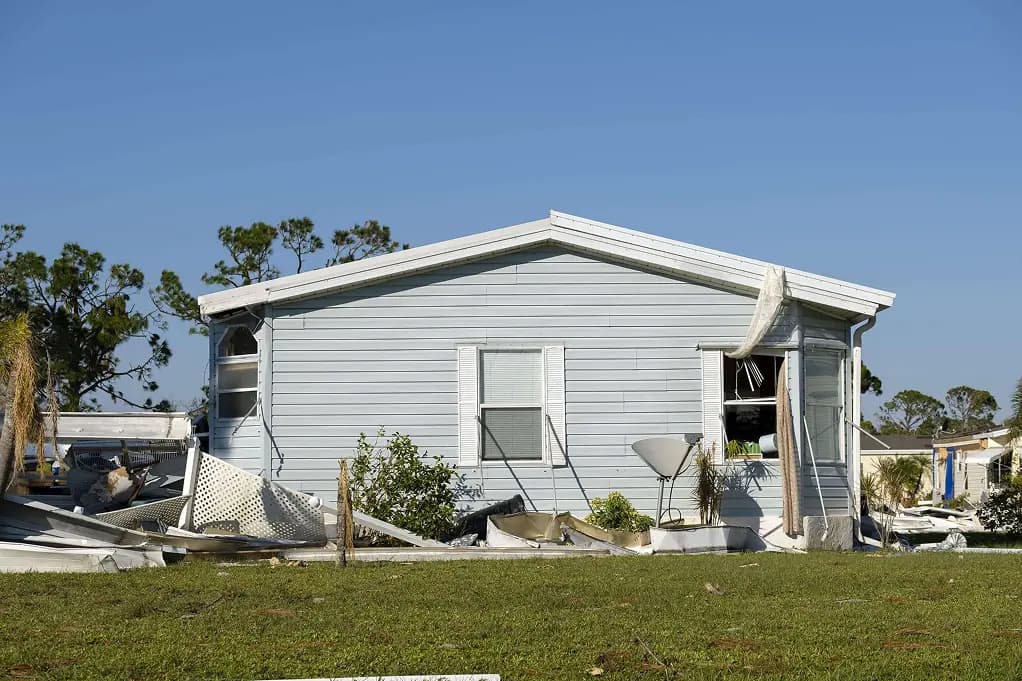
It changes by the cost of the work, and that's the whole point of selling as-is. A house with a gutted bathroom, deferred maintenance or an unpermitted addition can still be bought. We take it as it stands and handle what comes with it.
So the same street can produce two very different offers. A move-in-ready home with a recent roof sits near the sold prices around it. A home that needs a new kitchen and systems sits lower, by what those repairs would cost. You don't have to guess at those costs or find contractors. Someone from the local team looks at the house and explains what they see.
What happens if I get a number and want to compare it?
Please do compare. Get an agent's view of what the house might list for. Talk to other buyers. Put the numbers side by side: what you'd net after commission, repairs and the months of carrying the house, against one cash number with a closing date you pick.
Most sellers aren't deciding alone. You might need to talk it over with a sister who lives out of town, an adult child or a lawyer. Take the offer home and show it to them. The offer will still be here when you're ready, and if it doesn't fit, no hard feelings.
How does selling for cash work, step by step?
- You tell us about the house. An address, a few details and what's going on. That's enough to start.
- We look at the house and the neighborhood. We review nearby sales and walk through the property, because a number set without seeing the house is a guess.
- You get one offer, with the reasoning. We explain how it was built, so you're never left wondering where it came from.
- You take your time. Talk it over with family, an attorney or an agent.
- If it works, you choose the closing date. Close in as little as seven days, or take ninety, whichever suits you.
The team behind this has bought 1,500+ houses since 2016, and the process doesn't change from one house to the next. The only things that change are the house and your timeline.
What should I ask any cash buyer before I accept?
A few plain questions protect you with anyone:
- Can you show me how you got this number?
- Are there any fees or costs that come out of my proceeds?
- Who will walk through the house, and who will I talk to afterward?
- Is the closing date mine to choose?
- Will you put the offer in writing?
A good answer to each is short and specific. If you'd like to see what that looks like, you can sell your San Francisco Bay Area house fast or at your own pace by asking for an offer with no pressure.
Where can I read more about why sellers choose cash?
If you're weighing the trade-offs, our guide to the top benefits of a cash offer on a house covers what a cash sale does and doesn't take off your plate.
The math behind an offer isn't complicated. Sold prices, the work the house needs, the costs of closing and the time it takes. Once you can see those four things, you can decide whether the number is fair.